Travel guide to the Northwest Passage & Arctic Canada
The Northwest Passage is a series of waterways that connects the Atlantic and Pacific Oceans via the Arctic Ocean, along the northern coast of North America.
9 mins read
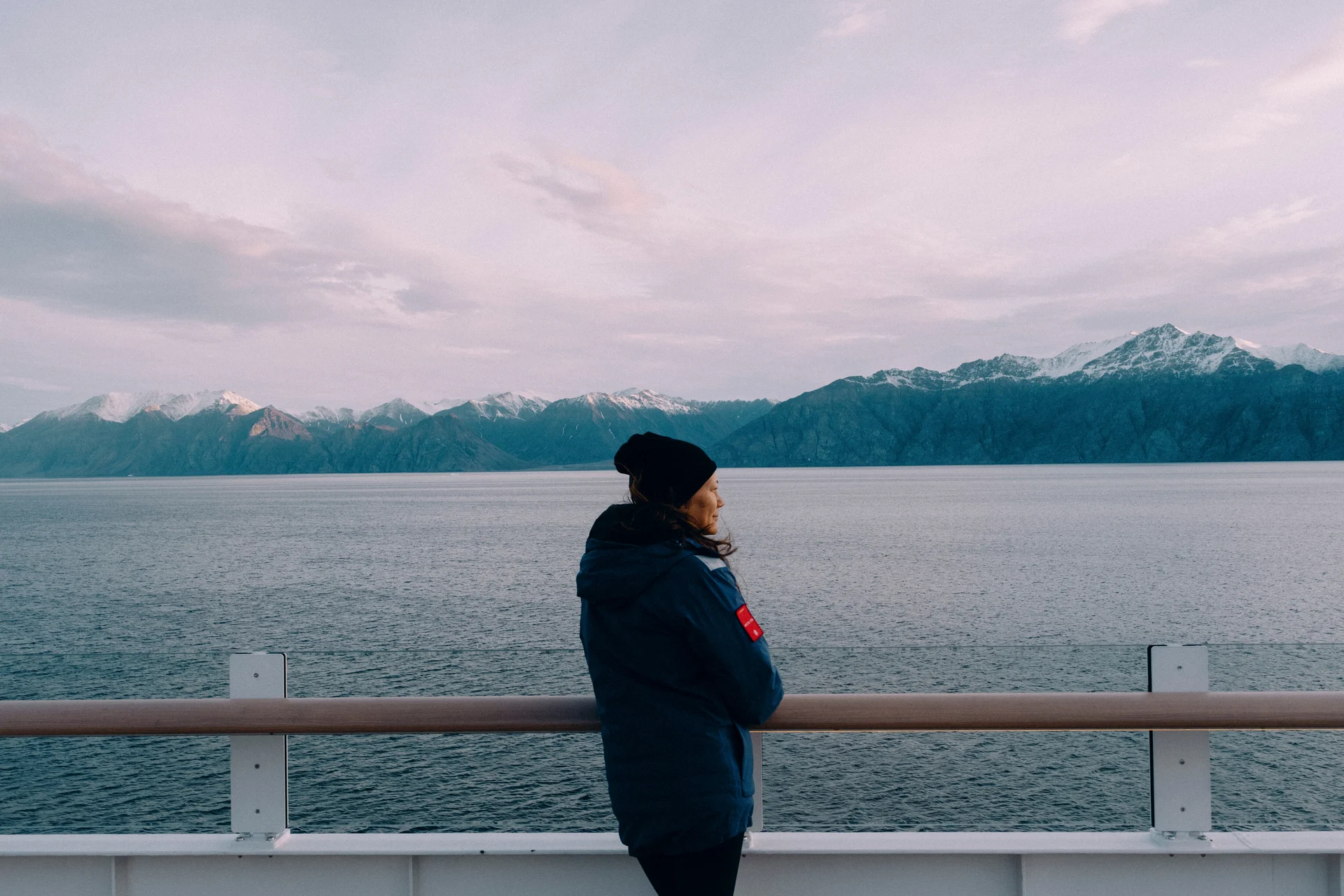
Why travel to the Northwest Passage
For centuries, attempts were made to cross the passage in order to find a shorter route between Europe and Asia. None were successful and many lives were lost until Norwegian Roald Amundsen finally succeeded in 1906. The Passage is still inaccessible for most parts of the year and only a few exploration companies offer a full Northwest Passage crossing attempt in the summer. Travelling through the Northwest Passage is a unique experience only for the most adventurous explorers, and a unique experience.
Here, across the roof of North America, you can experience the raw beauty of nature. The Northwest Passage is known for its largely untouched landscape, which forms pristine habitats for a wide array of wildlife both on land and below the water.
Best time to visit
The Northwest Passage is only accessible by ship between July and September. This is the only time of the year the ice has reduced enough to allow a crossing attempt. July and August are also the peak months to spot wildlife. For example, polar bears are particularly active, hunting whales and seals along the floating sea ice. The summer days are long, which help to maximize our chances of wildlife sightings.
Travelling through the Northwest Passage
You can choose to transit the labyrinth of the Northwest Passage eastward from Alaska to Greenland, or westward from Greenland to Alaska. Both represent epic adventures, and you’ll discover traditional Inuit settlements, UNESCO-listed sites, spectacular scenery and abundant wildlife. Here are some of the highlights we hope to see at each stage of our journey:
In the Beaufort Sea and Bering Strait
1. The Bering Strait
The Bering Strait is captivating due to its unique blend of natural and cultural significance. It's a narrow passage that separates two continents, Asia and North America, with a mere 55 miles between them. This geological marvel is also a vital migratory route for numerous species, including whales and seabirds. Moreover, it holds historical importance as a bridge for early human migrations. These are the traditional homelands of Inupiaq and Yupik peoples. The Bering Strait is also a crossroads where geology, history, and culture converge, making it a fascinating destination.
2. International Date Line
Conditions permitting, we may be able to briefly sail past the international date line where for a few moments you will have 'tomorrow' on one side and 'today' on the other. But don’t worry about changing your calendar as our crossing will be brief and ceremonial!
3. Sailing the Beaufort Sea
This seldom-visited sea is only open for navigation for a short period each year. Our transits are planned for when the sea ice has receded enough to allow safe passage. Sea ice may still be present which will provide opportunities for wildlife watching as we navigate our way through. It’s important to note that sea ice fluctuations can vary, and sea ice levels may be greater than the seasonal average and affect the speed we’re able to sail through.
Wildlife Watching
As we sail through the Bering Strait, look out for over 30 species of seabirds, including Black-legged Kittiwakes, auklets and murrelets. Also keep an eye out for bowhead and grey whales as we cross to Point Barrow, the northernmost point of the United States. If sea ice is present, we may also be able to observe huddles of Pacific walruses on the ice floes.
In the western Northwest Passage
1. Herschel Island
This remote island, located off the northern coast of Canada, boasts a rich cultural heritage, with the remnants of Inuvialuit and Western whaling communities. It's a living testament to the past, with well-preserved structures and artefacts. Additionally, the island is a haven for Arctic wildlife, offering opportunities to witness migratory birds and marine life. Herschel Island's blend of history, culture, and pristine landscapes make it a truly intriguing destination in the far north.
2. Smoking Hills
Smoking Hills is an intriguing natural wonder in Canada’s Arctic. This site along the Arctic Ocean coastline is renowned for its blazing cliffs, where lignite – eroded shale mixed with pyrite – spontaneously ignites when exposed to air, creating the phenomenon of smoke billowing from the cliffs. Testament to the Earth's power, the vivid colours and constant smouldering make Smoking Hills an awe-inspiring sight, in an ever-changing display of nature’s fiery artistry.
3. Ulukhaktok
Ulukhaktok in the Northwest Territories is a remote Inuvialuit community known for its vibrant arts and crafts, with talented artisans creating exquisite sculptures and prints showcasing the Arctic's natural beauty. Here, you might see drum dancing and traditional hunting and fishing practices. The beautiful landscape and the warm hospitality of the locals make Ulukhaktok a unique and engaging stop.
4. Cambridge Bay
This charming hamlet is close to the Ekaluk River on Victoria Island and is known for Arctic char fishing. The surrounding terrain is peppered with icy lakes and ponds and the community here is the largest in the Kitikmeot region, with 1,766 people. Due to its natural riches, Cambridge Bay has been inhabited for over 4,000 years, and today it’s home to the Canadian High Arctic Research Station.
5. Coronation Gulf This waterway derives its name from the HMS Investigator's voyage to the region to search for the lost Franklin Expedition during the coronation year of Queen Victoria in 1851. It’s a place where explorers once braved the harsh conditions in their search for the passage, making it an ideal destination for those intrigued by polar history. Cultural experiences with local Inuit communities add another layer of fascination.
6. Gjoa Haven (Uqsuqtuuk)
Gjoa Haven was named after Roald Amundsen’s ship Gjøa, and holds a pivotal place in Arctic history. In Inuktitut, the hamlet is called Uqsuqtuuk, ‘Place of Plenty of Blubber’. Amundsen, the first to successfully navigate the Northwest Passage, spent two years here. The unique history, combined with the vibrant Inuit culture, makes Gjoa Haven an extraordinary destination. Unlike many other communities in Nunavut, Gjoa Haven offers a direct connection to one of the most significant Arctic exploration stories.
7. Conningham Bay
Located on the southeast coast of James Ross Island this small bay is one of the wilderness destinations we’ll visit along our route. Here it’s possible to see groups of beluga whales swimming along the shores, and we’ll also keep our eyes out for polar bears.
In the eastern Northwest Passage
Fort Ross
Fort Ross is the site of an abandoned former trading post on Somerset Island in the Kitikmeot region of Nunavut. Founded in 1937, it was operational for only eleven years before severe icy conditions rendered it uneconomical and difficult to reach. The two store buildings are still used as a shelter by Inuit hunters.
2. Beechey Island (Iluvilik) This site holds a significant place in the history of Arctic exploration, known particularly for the ill-fated Franklin expedition in the mid-19th century. The island is home to several well-preserved grave sites of expedition members, and a monument commemorating Arctic exploration efforts.
3. Prince Leopold Island (Appait)
With soaring cliffs as high as 870 ft, birdlife thrives on Prince Leopold Island. The island is a designated Important Bird Area with species like Black-legged Kittiwakes, Northern Fulmars and guillemots found here in abundance.
4. Croker Bay
Croker Bay is a picturesque bay on the south coast of Devon Island. With two large outlet glaciers streaming down from the island’s ice cap, this is an excellent place for small boat cruising. You may even spot walruses lounging around the calved ice floes.
5. Dundas Harbour
This historic and scenic site is on the southern shores of Devon Island. The harbour is a former Royal Canadian Mounted Police (RCMP) post, and it was also a base for scientific research and exploration. A great spot for a hike, musk oxen are frequently seen along the peninsula.
6. Pond Inlet (Mittimatalik)
Located on Baffin Island’s Eclipse Sound, Pond Inlet is known as Mittimatalik in Inuktitut, meaning ‘The Place Where the Landing Place Is', and it’s home to a small Inuit community. On a clear day here, you can see the snowcapped peaks of Sermilik National Park on Bylot Island across the fjord. We may be lucky enough to have a performance by the Tununiq Arsarniit Theatre Group, which was founded in 1987 and develops its plays and performances by consensus, involving elders as both actors and writers.
What to Expect
If you decide to go, you’ll find a magical unspoiled world in the High Arctic, beautiful scenery, glaciers and ice landscape. You might see majestic polar bears out hunting, different species of whale breaching, walruses relaxing by the shore, and a variety of birds. Remember that these are natural Arctic habitats, so we can’t guarantee that certain animals will appear during your expedition. You will experience both the modern life of the Inuit population and their communities, culture and life and learn more about the history of the region.
Both on board and on land, there’s a lot going on to make the most out of your journey. Here are some of the most popular activities:
Small boat cruising in one of the most remote parts of the world. The ship will not be able to dock everywhere and anywhere. That's why each ship has explorer boats to take you ashore or on ice cruising excursions.
Nature landings are landings on beaches and shore areas. They happen wherever possible.
Hiking is another popular activity. This could be at places of historical, biological or geological interest, small settlements, or places that offer stunning natural beauty.
Lectures and science program. When the ship is at sea, there’s plenty happening on board as well. Join in-depth lectures on a variety of topics from history and culture to wildlife and science. The Science Program enhances the experience and understanding of the regions we explore and invites you into the fascinating world of science.
Photo program. There is a professional photographer on board you can access for hints and tips, camera set-up and simply how to take great pictures.


